Every API gateway on the market now calls itself an AI gateway. In a single recent stretch, Kong shipped agent-to-agent support, Gravitee added MCP dashboards, Tyk open-sourced its AI studio, and Apigee expanded its managed MCP server. For an enterprise trying to govern real AI workloads, the labels have stopped being useful, because the interesting question is not who owns the category name but what a platform actually enforces on a live model call.
Apigee’s answer is worth understanding, and it starts with a clarification that cuts through a lot of the noise: there is no separate product called the Apigee AI Gateway. The term describes Apigee, Google Cloud’s API management platform, with a set of AI-specific policies attached to the same proxy engine that has governed enterprise APIs for well over a decade. That distinction is the whole point. Instead of asking teams to adopt an unfamiliar tool, Apigee brings 20 years of API management maturity, its identity model, its analytics, its threat protection, to the new problem of governing models, tools, and agents.
And it is genuinely a new problem. When an autonomous agent can make thousands of model calls in a loop, invoke enterprise tools on a user’s behalf, and hand off work to other agents, the gateway no longer routes static endpoints and checks tokens. It has to inspect payloads for sensitive data and prompt injection, meter consumption by the token, decide which model each request should reach, and keep an audit record of the whole exchange. Model Armor, Apigee’s LLM safety layer, entered public preview precisely because that inspection cannot be an afterthought. The sections that follow break down how Apigee governs each layer and where enforcement happens.
What Is the Apigee AI Gateway?
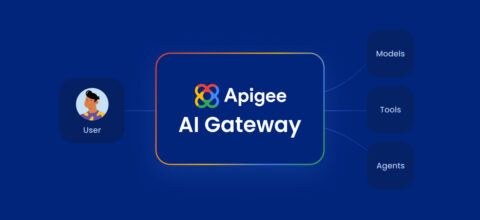
The Apigee AI Gateway is a set of AI-specific capabilities within Apigee, Google Cloud’s API management platform, that let you govern AI workloads the way you already govern APIs. It sits between your users, applications, and agents on one side, and your models, tools, and downstream providers on the other, so that every AI interaction passes through a single controlled path.
That position is what makes it powerful. Because Apigee has spent well over a decade as an enterprise-grade API gateway, handling authentication, traffic management, analytics, and threat protection at scale, it brings all of that maturity to AI traffic and adds the AI-aware controls the new workloads demand. The result is universal governance across three distinct but related domains: the models your organization calls, the tools those models and agents use, and the agents themselves. Rather than governing each in isolation with different tooling, Apigee provides one enforcement layer for all three.
The Three Governance Gaps in Enterprise AI
Before looking at how Apigee governs AI, it helps to name what actually goes wrong without it. Across AI agents, autonomous LLM calls, and multi-prompt loops, the same three gaps appear again and again.
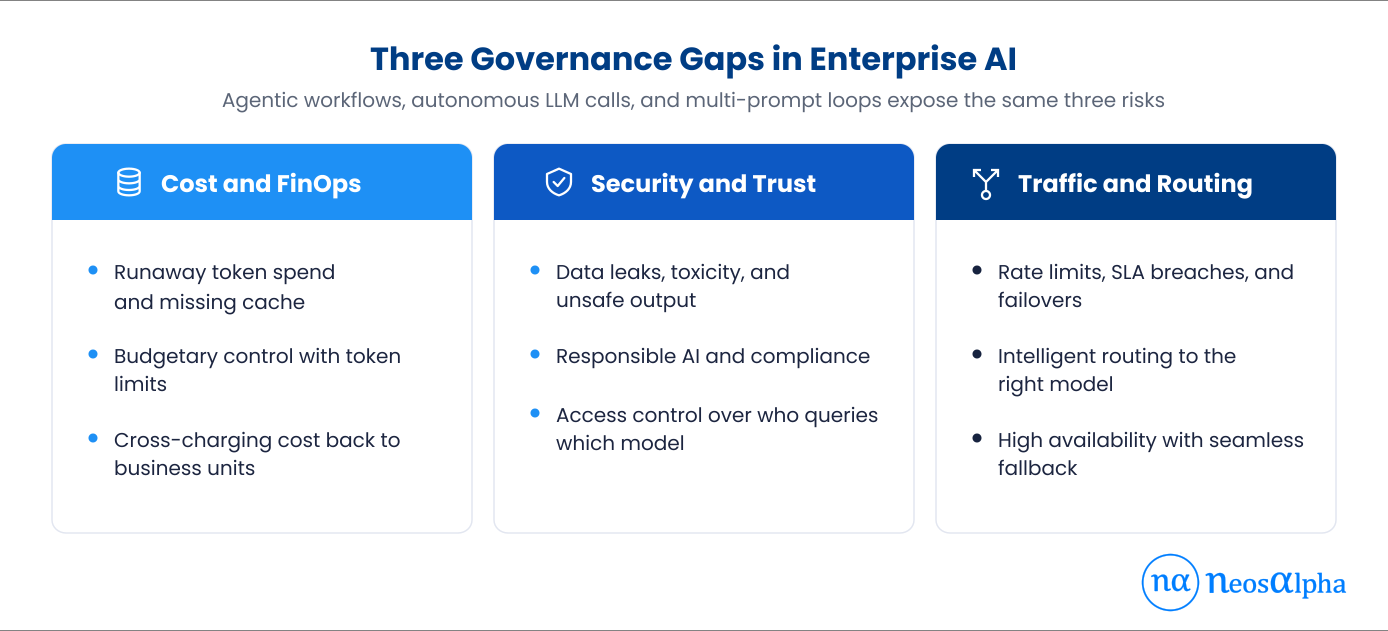
- Cost and FinOps – AI models bill by the token, and agentic workflows can generate enormous volumes of calls, so runaway token spend and a lack of caching quietly inflate the bill. Enterprises need budgetary control through token limits and response caching, and they need to attribute model consumption accurately back to the business units driving it.
- Security and trust – AI introduces risks traditional tools were never designed to catch: sensitive data leaking into prompts or responses, toxic or non-compliant output, and the question of which users and systems are even allowed to query a given foundation model. Governing this means preventing data leaks, monitoring for unsafe content, and enforcing real access control.
- Traffic and routing – Diverse foundation models, proprietary, open, and locally hosted, all carry their own rate limits and availability characteristics. Without a gateway, an SLA breach or a provider outage cascades straight into your applications. Enterprises need intelligent routing to the most cost-effective capable model, plus high availability through seamless failover.
Apigee AI Gateway Architecture
The Apigee AI Gateway resolves those gaps by putting Apigee directly in the path between AI consumers and everything they call, and layering policies at each stage of the journey.
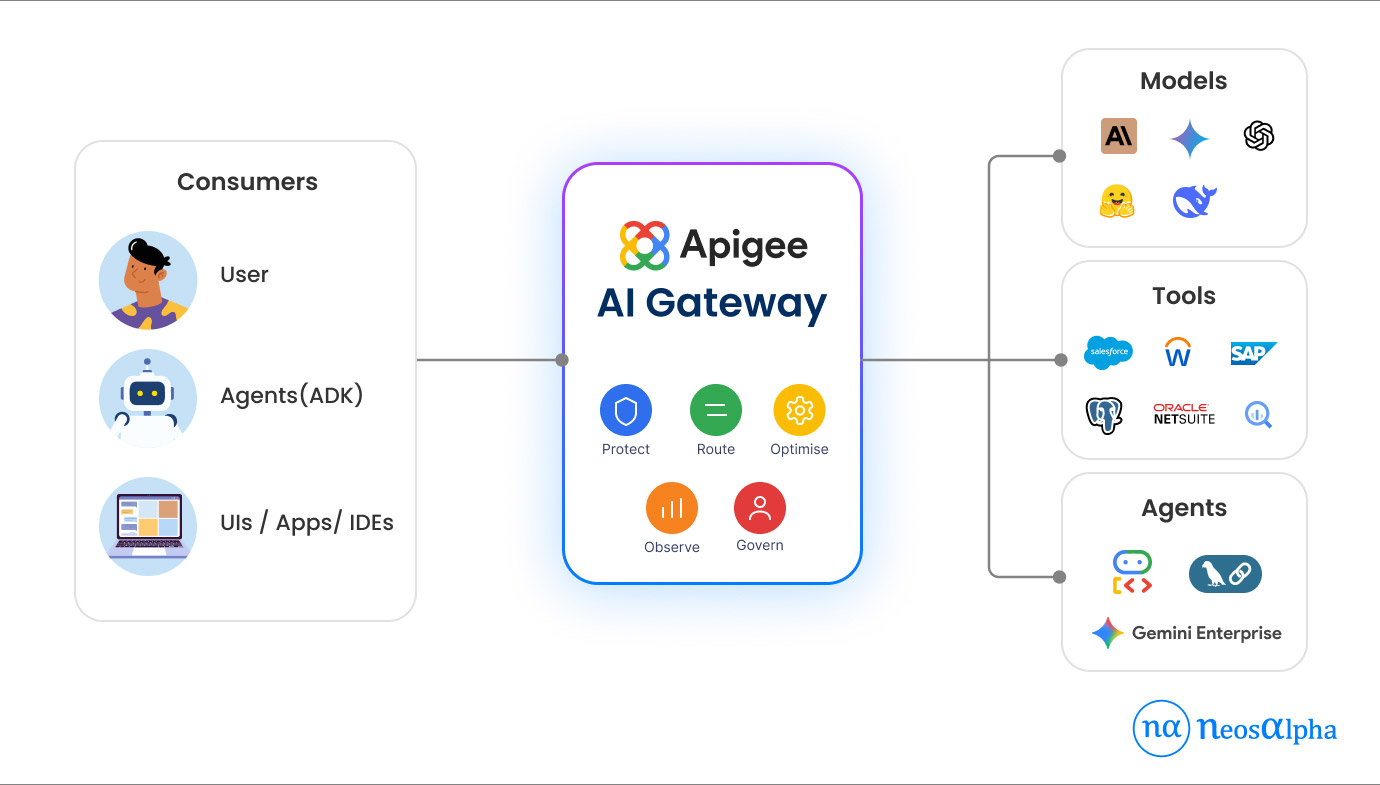
On the inbound side, users, agents built with frameworks like the Agent Development Kit (ADK), UIs, apps, IDEs, and CLIs all send their requests to Apigee rather than directly to a model or tool. Ingress and authentication policies establish trust at the entry point, enforcing authentication and authorization for models, tools, and agents alike. From there, requests flow through a stack of controls: AI security screening with Model Armor, attribute-based access control (ABAC) and rate limiting with recursive-loop prevention, and then quotas, budgets, model routing, failover, and control. Every interaction feeds analytics, FinOps, and auditing.
On the outbound side, the gateway applies model, tool, and agent policies as traffic fans out to its destination. Models can be anything from Gemini and Gemma in Model Garden to Anthropic Claude, third-party frontier providers, AWS Bedrock, or Azure AI Foundry. Tools are reached through a built-in MCP server with API and payload translation. Agent gateways and sub-agents handle agents and are governed by egress policies; throughout, Cloud Logging, Monitoring, and Audit capture the full record. The elegant part of this design is that it is one architecture, not three: the same gateway that secures a model call also governs a tool invocation and an agent interaction.
Apigee AI Gateway Policies
Underneath that architecture is a concrete set of AI policies you attach to your proxies, and they are worth understanding because that’s where governance gets enforced. Apigee ships purpose-built AI policies alongside its long-standing API policies.
The LLM token limit and token count policies let you meter and cap consumption based on the tokens a model actually uses, which is the foundation of cost control and chargebacks. The Model Armor policy applies Google’s unified AI safety layer to screen both prompts and responses. The semantic caching policy stores and reuses responses based on meaning, not exact text. These sit alongside Apigee’s established capabilities, spike arrest and quota policies for rate limiting, OAuth and API key policies for authentication, and data masking for sensitive content, so AI governance is not a separate silo but an extension of the same policy engine your API program already runs on. Because these are standard Apigee policies, you can combine them freely and apply them consistently across every AI proxy.
Our Apigee specialists help you design and implement token controls, Model Armor screening, and MCP tool governance across your models, tools, and agents.ring Governance to Every AI Call Your Enterprise Make
Governing Models: Consumption, Cost, and Availability
With the architecture and policies in place, the first domain to govern is model consumption, and this is where most enterprises feel the pain first. Picture a platform lead building a unified GenAI platform for the whole company. Their goals are familiar: give application teams simple access to diverse models, keep the platform secure, and keep the budget under control. Standing between them and that goal is a series of very practical questions.
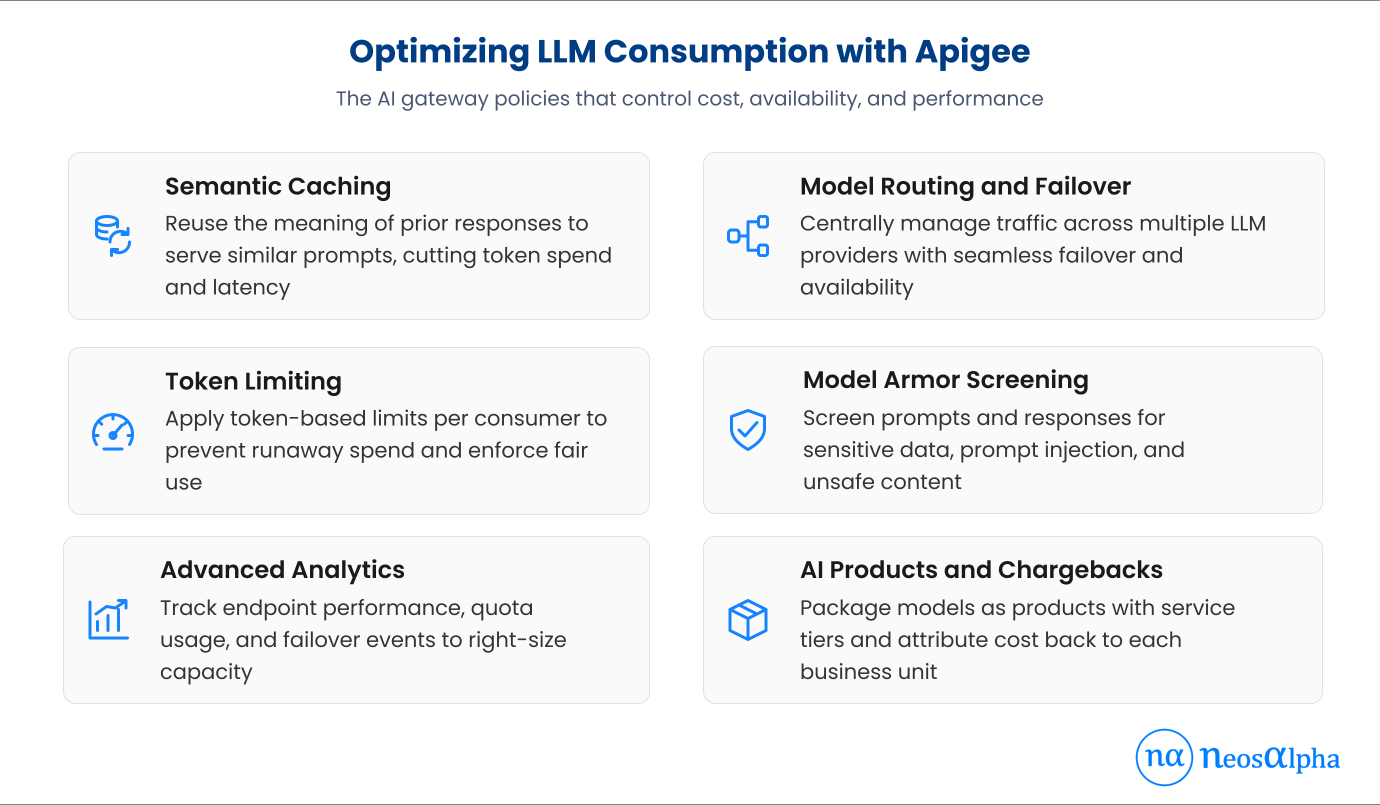
How do you support a unified LLM endpoint so application teams do not have to integrate each provider separately? How do you apply token-based limits to LLM consumers so no single team can run away with the budget? How do you optimize consumption and improve the user experience at the same time? How do you ensure availability for GenAI apps when a provider has an outage, and how do you learn about consumption trends across the organization?
Apigee answers each of these.
- Model routing and failover centralize traffic management across multiple LLM providers, so you can handle failover, logging, and security in one place while maintaining availability.
- Semantic caching improves performance and cuts costs by storing and reusing the meaning of previous responses, serving similar prompts efficiently even when the wording varies slightly.
- Token limiting applies to precise per-consumer budgets.
- Advanced analytics provides insight into endpoint performance, quota usage, and failover events, so you can adjust capacity allocations to match real traffic.
One practical detail Apigee handles well is that different providers report token usage differently, in the response body for some, in response headers for others, and the gateway normalizes this so your metering is consistent no matter which model answered.
Recommended Read – The Complete Guide to AI Gateways: How Enterprises Keep AI Secure, Governed, and Affordable
AI Products Through a Security Lens
Consumption governance answers the cost and availability questions, but there is a parallel set of questions that are purely about security, and they have to be answered before any model or agent reaches production. Viewed through a security lens, AI products raise five key concerns.
How do you detect and de-identify sensitive data in prompts and model responses? How do you detect and block adversarial prompts such as prompt injection attempts? How do you create an audit trail of every LLM interaction? How do you enforce authorization controls over who can do what? And how do you ensure the platform remains compliant as it grows?
Apigee addresses these through three layers working together.
- Model Armor provides unified safety and security for LLM prompts and responses, mitigating sensitive-data leakage, prompt injection, and offensive content at the gateway.
- Platform security and logging applies policy-based configuration for authentication, authorization, and logging, governing onboarding and democratizing access without loosening control.
- Advanced API Security detects misconfigured endpoints and traditional application attacks, keeping the platform compliant. The important idea is that security is applied at the entry point, before a request ever reaches a model or tool, so unsafe traffic is filtered rather than merely logged after the fact.
Governing Tools: MCP and the Rise of Agent Skills
Models are only half the story. As AI systems become agentic, the tools those agents can call, and increasingly the skills they expose, become just as important to govern, and this is a fast-moving frontier.
The challenge starts with how tools are exposed. When an agent asks a Model Context Protocol (MCP) server for its available tools, the naive approach returns the entire list. That bloats the prompt window and scales token cost, increases the risk of hallucinated or incorrect tool calls, and offers no way to enforce which agent can use which tool. Add the need to transcode existing enterprise APIs into MCP tools with consistent schema mapping, and tool governance becomes a real discipline of its own.
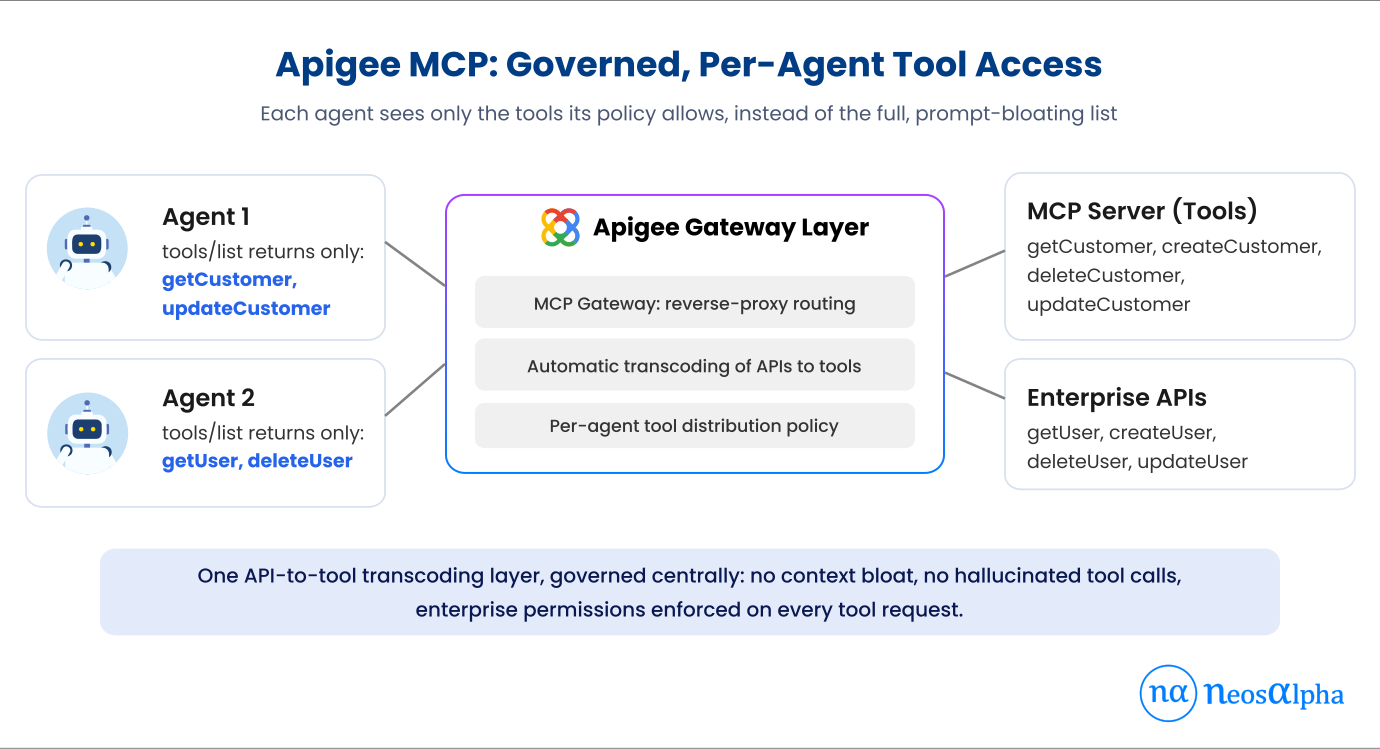
Apigee handles this by acting as the MCP gateway and governance layer. It automatically transcribes APIs into tools, so your existing enterprise APIs become MCP tools without bespoke rebuilding, and it applies dynamic, per-agent tool listing. Instead of every agent seeing every tool, each agent’s policy determines exactly which tools appear in its tools/list response. One agent might be allowed only getCustomer and updateCustomer, while another sees only getUser and deleteUser. This keeps prompt windows lean, prevents unverified access, and enforces enterprise permissions on every tool request, all with rate limiting and caching protecting the backend.
This connects directly to the rise of agent skills in the AI ecosystem. As enterprises build libraries of reusable capabilities that agents can discover and invoke, those skills need the same treatment tools do: a place to be registered, discovered, secured, and distributed with governance. Apigee’s API Hub extends naturally into this role, providing semantic discovery and acting as a catalog for both APIs and agentic skills, with an Agent Registry integration so skills are synced and governed rather than scattered. For tools, this means a mindset shift: a tool is no longer just an API endpoint; it is a governed, discoverable product that agents consume, and it deserves the same lifecycle management your APIs already have.
Governing Agents: A2A, AP2, and Agent Exposure
The third domain is the agents themselves, and as agents begin talking to other agents, governance has to follow them into those interactions. Agent-to-agent (A2A) communication and agent payments (AP2) introduce requirements that go beyond what a model or tool call needs.
Access control becomes more granular: AP2 calls for method-level control over what an agent can execute, and A2A authorization flows need restricted token scopes so an agent cannot exceed its remit. Resilience matters more, because a chain of agents can cascade a failure quickly, so circuit breakers that automatically isolate an unhealthy downstream agent or microservice are essential. Performance governance also tightens because agent operations can be expensive, so SLA management and rate limits tailored to agent workloads keep costs and latency in check.
Apigee governs all of this through its agent policies and its role in agent exposure management. It enforces authentication, authorization, RBAC, and ABAC for trusted agent communication, prevents recursive loops, and adds fallback and failover across regions and models. For agents exposed to third-party developers, partners, or external SaaS platforms, Apigee provides the access protection and exposure management that lets you share agents safely without surrendering control.
AI Productization: Turning LLMs Into Governed Products
Governing consumption, security, tools, and agents gets you a controlled platform. The final step is turning that platform into something the rest of the organization can consume on a self-service basis, and this is where AI productization comes in. The productization challenges are distinct from everything above: they are about packaging and economics rather than raw enforcement.
How do you enforce a token budget with a tiered model, so different consumers get different service levels? How do you productize LLMs in a centralized platform rather than as one-off integrations? How do you charge back for consumption so costs land with the teams that incur them? How do you govern a self-onboarding experience for application developers? And how do you share consumption insights and trends with those consumers so they can manage their own budgets?
Apigee answers these by treating AI capabilities as products, which is something its API management heritage makes natural. AI products and chargebacks let you define token-based service tiers, fine-grained model access, and chargeback models so that you can control and account for consumption. A custom model garden democratizes access by publishing AI and LLM products to a catalog with a self-onboarding experience, so developers can discover and subscribe to models the same way they consume any API product. Advanced visualizations share consumption insights directly with consumers, letting them manage token budgets and monitor historical model performance. This is what turns a governed AI platform into a genuine internal marketplace, with the financial visibility that keeps AI spend accountable.
Apigee as the Enterprise AI Enabler
Put the domains together and a complete reference architecture emerges, one that positions Apigee as a critical enabler across the entire enterprise AI stack rather than a point solution.
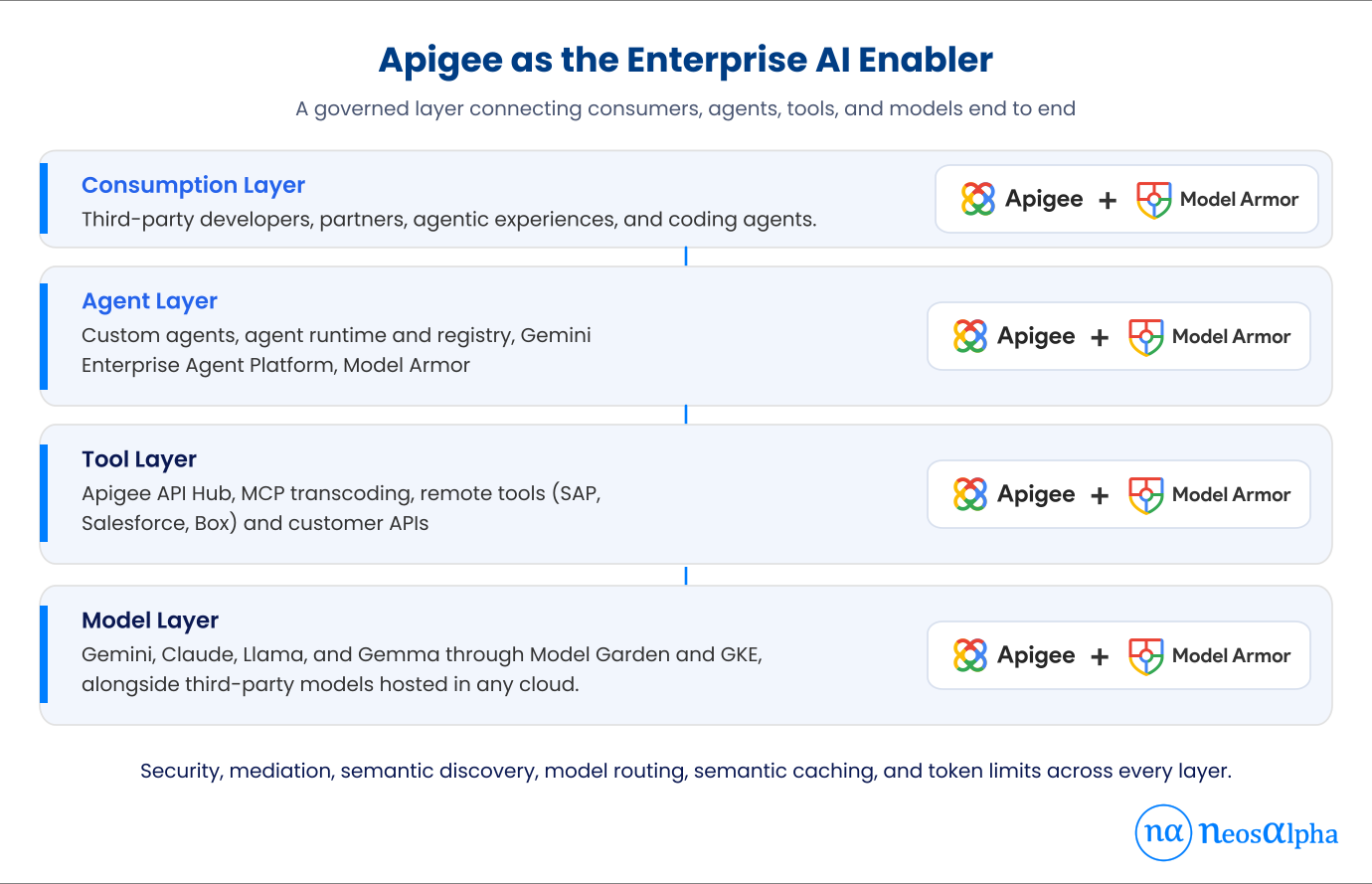
At the consumption layer, third-party developers, partners, agentic experiences, and coding agents all reach AI capabilities through governed access, with agent exposure management and access protection in front. At the agent layer, custom agents, agent runtimes and registries, and platforms like Gemini Enterprise sit behind Apigee and Model Armor, with model routing, semantic caching, and token limits applied to their model calls. At the tool layer, Apigee API Hub and MCP transcoding connect agents to remote tools such as SAP, Salesforce, and Box, as well as customer APIs, with access security, mediation, and semantic discovery. And at the model layer, Gemini, Claude, Llama, and Gemma, served through Model Garden and GKE, along with any-cloud third-party models, are all reached through one governed path.
The value of seeing it this way is consistent governance at every layer. The same platform secures the model, the tool, the agent, and the product, which is exactly what an enterprise needs to scale AI with confidence rather than accumulating risk.
How NeosAlpha Helps
Understanding the Apigee AI Gateway is one thing. Designing it around your enterprise, integrating it with your systems, and getting it into production is another, and this is where NeosAlpha’s expertise is directly relevant.
NeosAlpha is a certified Google Cloud partner with deep, long-standing Apigee specialization, and API management sits at the core of what we do. We have spent years helping enterprises design, build, and operate Apigee platforms, from API proxy development and security to analytics and developer portals, which is precisely the foundation the AI Gateway is built on. An AI gateway is, underneath, an API management and integration challenge with AI-specific requirements layered on top, and that intersection is our home ground.
Our teams help organizations assess where their AI traffic flows today and where it is ungoverned, design the model, tool, and agent policies that fit their compliance and cost requirements, and implement the gateway as a working enforcement layer rather than a diagram. Because our expertise spans API management, integration, and agentic AI, we can connect Apigee to the models, tools, and enterprise systems your agents need to reach, set up Model Armor, semantic caching, token governance, and MCP tool distribution, and stand up the AI productization layer that turns your platform into a governed internal marketplace. The result is an Apigee AI Gateway that genuinely puts you in control of your AI estate.
The reliability of governance depends on the APIs that form its foundation; therefore, testing is an integral part of our delivery process. Using our API test automation platform, our engineers validate every AI proxy and MCP tool before it goes live. This includes verifying response schemas, token metering, failover paths, and policy behavior under various scenarios—such as provider outages or malformed payloads. The result is an ‘Apigee AI Gateway’ that grants you genuine, comprehensive control over your AI estate (AI resources).