Introduction
Every large organization faces the same fundamental data problem: data is everywhere, and nowhere. Sales data lives in Salesforce. Finance data lives in SAP. Operational data lives in a custom ERP. Customer interaction data lives in marketing automation tools. Log data streams from cloud infrastructure. And somewhere, there’s a data warehouse that’s supposed to bring it all together, but it’s perpetually six months out of date, and nobody fully trusts it.
The result is predictable: data silos, duplicated pipelines, inconsistent definitions of key metrics, governance that no one can actually enforce, and analytical teams spending 70% of their time on data preparation rather than data analysis. Business leaders can’t get a single unified view of operations. Regulatory compliance is an exercise in patching together audit trails from a dozen disconnected systems.
Data fabric is the architectural concept designed to solve this problem. Not by moving all your data into one giant system, but by creating an intelligent, unified fabric that connects your existing data sources, enforces consistent governance, and makes data accessible to every authorized user, wherever they are and whatever tool they’re using.
In this article, we’ll break down what is Data Fabric, how it works architecturally, its core components, how it differs from related concepts like data mesh, and what it looks like in practice for enterprises implementing it today.
What Is Data Fabric? The Full Explanation
At its core, data fabric is an architectural approach, not a single product or tool. It describes a design philosophy and a set of patterns for managing, integrating, and governing data across a diverse, distributed landscape.
The term was coined by Gartner and has been widely adopted by technology analysts and enterprise architects. Gartner defines data fabric as a design concept that serves as an integrated layer (the fabric) of data and connecting processes. A data fabric automates data discovery, governance, and consumption, enabling decision-making and operational processes to be fueled by the right data at the right time, regardless of where it resides.
The key distinction from traditional data management approaches is virtualization over duplication. Traditional data pipelines copy data from source systems into a central data warehouse or data lake. This creates consistency (everyone uses the same copy) but introduces latency (data is as fresh as the last pipeline run), storage costs (you’re paying to store data twice), and brittleness (pipelines break when source schemas change).
Data fabric instead creates a logical layer, a unified access and governance plane that sits over your existing data sources. Data analysts and consumers access data through this fabric layer, which routes queries to the appropriate source, enforces access policies, tracks lineage, and returns results in a consistent format, all without the data physically moving to a new location.
Why Is Data Fabric Important? The Business Problem It Solves
To understand why data fabric has become one of the most discussed concepts in enterprise data architecture, it helps to understand the problem landscape it addresses.
-
The Problem of Data Proliferation
According to a study, the global datasphere is expected to grow to 230-240 zettabytes by 2026. Enterprises are generating data from more sources than ever: IoT devices, cloud-native applications, SaaS platforms, social media, edge computing, and more. This data explosion has outpaced organizations’ ability to manage it with traditional ETL pipelines and centralized warehouses.
-
The Problem of Hybrid and Multi-Cloud Reality
Very few large enterprises operate in a single cloud environment. Most have a complex landscape of on-premises systems, multiple cloud providers (Azure, AWS, GCP), and dozens of SaaS applications. Centralizing all this data in a single system is theoretically appealing but practically infeasible; data residency regulations may prohibit it, latency may render it impractical, and the cost of moving petabytes of data is prohibitive.
-
The Problem of Data Governance at Scale
As regulatory requirements expand, including GDPR, CCPA, HIPAA, and financial services regulations, the ability to know where sensitive data is, who has access to it, and how it’s being used becomes a compliance imperative. Traditional approaches, where governance is configured separately in each tool, are too slow and too error-prone to meet modern compliance requirements.
| The Data Fabric Value Proposition
By creating a unified layer of data access and governance that spans your entire data landscape without requiring data movement, data fabric enables organizations to get more value from the data they already have while reducing the cost, complexity, and risk of managing it. |
Data Fabric Architecture: How It Works
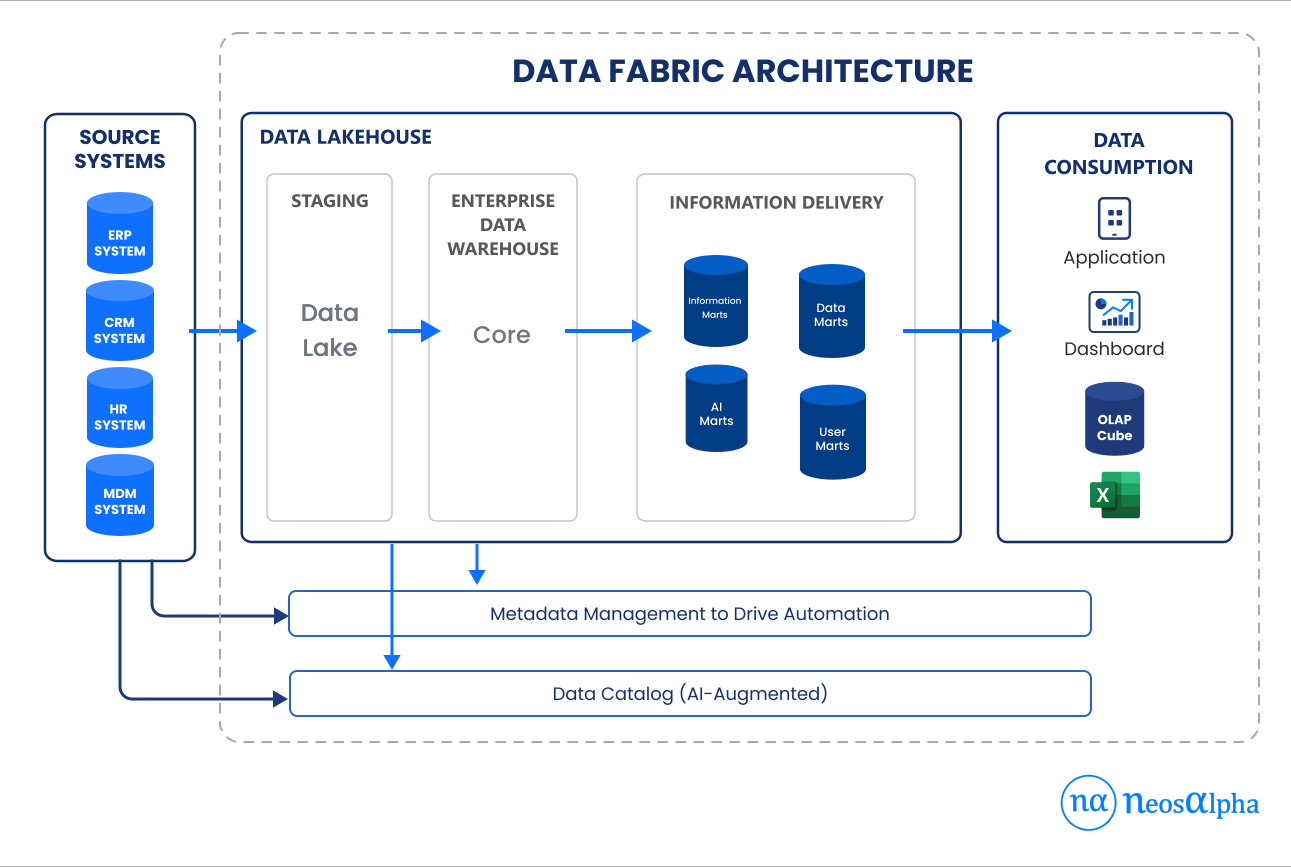
Data fabric architecture is organized around several interconnected layers that together create the unified, intelligent fabric for data management. Here’s how the architecture breaks down:
Layer 1: Data Sources
The foundation of any data fabric implementation is the universe of data sources it connects. These can include: relational databases (SQL Server, Oracle, PostgreSQL), cloud data warehouses (Azure Synapse, Snowflake, BigQuery), NoSQL databases (MongoDB, Cosmos DB, Cassandra), data lakes (Azure Data Lake, Amazon S3, Google Cloud Storage), SaaS applications (Salesforce, SAP, Workday, ServiceNow), streaming data platforms (Apache Kafka, Azure Event Hubs), file systems and document stores, and external data sources and APIs.
The data fabric doesn’t replace these sources; it connects them. Each source continues to operate as before; the fabric adds a unified access and governance layer above them.
Layer 2: Data Integration and Virtualization
This is the technical engine of the data fabric. Data integration tools handle the movement, transformation, and synchronization of data between systems when physical movement is required (e.g., batch ETL, ELT, and change data capture). Data virtualization handles cases where data can stay in place, queries are federated to source systems in real time, and results are assembled into a unified view without duplicating data.
Modern data fabric platforms combine both approaches: physical integration for data that benefits from consolidation (historical analytics, ML training datasets) and virtualization for data that should remain in place (regulatory-sensitive data, low-latency operational data).
Layer 3: Metadata Management and Data Catalog
Metadata is the nervous system of the data fabric. A data catalog registers all data assets across the fabric, their location, schema, lineage, quality metrics, ownership, and access policies. It provides the search and discovery interface that allows data consumers to find the data they need, understand its quality and provenance, and request access if needed.
Active metadata, metadata that the system uses to automatically optimize data delivery, suggest relevant datasets, and detect quality issues, is a defining feature of mature data fabric implementations. It’s what makes the fabric intelligent rather than merely connected.
Layer 4: Governance, Security, and Compliance
Governance in a data fabric is centralized, policy-driven, and automated. A unified governance layer defines access policies, sensitivity classifications, data quality standards, and retention rules, which are automatically enforced at the fabric layer, regardless of where the underlying data resides. This means a sensitivity label applied to a customer data asset automatically propagates to every downstream view, report, and export of that data.
Security in a data fabric operates at multiple levels: network-level encryption, identity-based access control (role-based or attribute-based), column-level and row-level security for fine-grained data masking, and audit logging for compliance trails.
Layer 5: Data Consumption and Analytics
The top layer is where data consumers, analysts, data scientists, business users, and applications interact with the fabric. They may use SQL query engines, BI tools, ML notebooks, data science platforms, or REST APIs. From the consumer’s perspective, data appears to come from a single, unified source; they don’t need to know whether data is being retrieved from an Azure Synapse table, a Salesforce API call, or a Parquet file in an S3 bucket. The fabric abstracts all of that complexity.
Explore how a modern data fabric can improve data accessibility, governance, and real-time insights across your business ecosystem.Struggling with Disconnected Data Across Your Enterprise?
Core Components of a Data Fabric
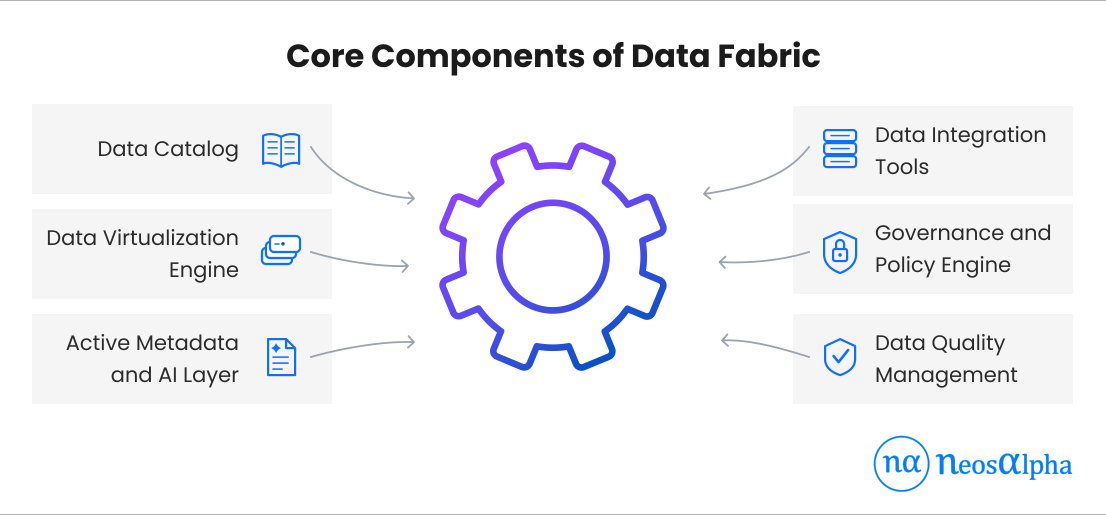
While implementations vary, a well-architected data fabric typically comprises these core components:
-
Data Catalog
A centralized inventory of all data assets, including metadata, lineage, quality scores, ownership information, and access policies. The catalog is the discovery interface for the entire fabric; it’s where users go to find data, understand it, and request access.
-
Data Integration Tools
ETL/ELT pipelines, change data capture (CDC), and real-time streaming connectors that handle the physical movement and transformation of data between systems when required. Examples include Apache Kafka, Apache Spark, Azure Data Factory, and dbt.
-
Data Virtualization Engine
A query federation layer that allows data consumers to query data across multiple sources simultaneously without physically moving it. The engine translates queries into source-specific dialects, executes them in parallel, and assembles the results.
-
Governance and Policy Engine
A centralized system for defining and enforcing data access policies, sensitivity classifications, quality standards, and retention rules across all sources in the fabric. Powered by tools like Microsoft Purview, Collibra, or Apache Atlas.
-
Active Metadata and AI Layer
An intelligence layer that uses machine learning to automatically classify data, detect quality issues, suggest relevant datasets, predict data demand, and optimize data delivery. Active metadata is what distinguishes a modern data fabric from a traditional data catalog.
-
Data Quality Management
Tools and processes for profiling, monitoring, and improving data quality across all sources in the fabric. Quality scores and lineage are surfaced in the catalog so consumers understand the reliability of data before using it.
Three Core Principles of Data Fabric
Regardless of implementation technology, a data fabric architecture is defined by three foundational principles:
1. Unified Data Access
A data fabric provides a logical data layer that abstracts the underlying data infrastructure, presenting a seamless and unified interface for data access across all sources. Users and applications interact with a single access layer, they don’t need to know which system stores the data, which cloud it’s in, or how to authenticate against it. The fabric handles routing, authentication, and query execution transparently.
This unified access layer is what enables a data analyst to write a single SQL query that joins a table from Azure Synapse, a view from Salesforce via an API connector, and a file from Amazon S3, as if they were all in the same database.
2. Standardized Governance and Security
Data governance in a fabric is not configured per tool or per source; it’s defined once, centrally, and enforced everywhere. Sensitivity labels, access policies, data quality standards, and retention rules are applied at the fabric layer and automatically propagate to all data assets beneath it. This standardization makes data fabric viable for regulated industries: instead of maintaining separate governance configurations across 20 tools, governance teams manage a single, consistent set of policies.
3. Automated Data Pipelines
The data fabric automates the backend plumbing, the pipelines that move, transform, and synchronize data. Rather than hand-coding individual ETL jobs for every source-to-destination combination, a data fabric platform auto-discovers data sources, generates integration metadata, and orchestrates data movement based on policy and demand. This automation reduces the engineering effort required to expand the fabric to new data sources and significantly reduces pipeline maintenance overhead.
Benefits of Data Fabric for Enterprise Organizations
The architectural principles of data fabric translate into concrete business benefits. Here’s what organizations that successfully implement data fabric typically experience:
| Benefit | What It Means in Practice | Who Benefits Most |
| Elimination of Data Silos | All authorized users can access all data through one consistent layer | Analytics teams, business users |
| Faster Time to Insight | No weeks-long pipeline projects to access new data, connect, and query | Data analysts, BI teams |
| Reduced Data Duplication | Virtualization means less storage cost and less risk of data inconsistency | Data engineers, IT operations |
| Automated Governance | Policies enforced at the fabric layer without per-tool configuration | Data governance, compliance teams |
| Improved Data Quality | Centralized quality monitoring and lineage tracking | All data consumers |
| Cloud & Hybrid Flexibility | Works across on-premises, Azure, AWS, and GCP without data migration | Enterprise architects, IT |
| Regulatory Compliance | Consistent audit trails, access logs, and sensitivity controls | Legal, compliance, risk teams |
| AI/ML Acceleration | Data scientists access unified, governed data without pipeline requests | Data science teams |
Data Fabric vs Data Mesh: Understanding the Difference
Data fabric and data mesh are often confused because they both address the problem of managing distributed enterprise data. They are actually complementary approaches with different philosophical starting points.
Data Fabric: Technology-Centric
Data fabric is a technology architecture. It focuses on the technical infrastructure that connects, governs, and manages data across distributed environments. Data fabric is typically implemented top-down: a central platform or team deploys the fabric layer, connects data sources to it, and configures governance policies. The organizational structure of data ownership isn’t necessarily changed; the technology mediates access to data that teams continue to own.
Data Mesh: Organization-Centric
Data mesh is an organizational and operating model. It argues that data should be owned and managed by the domain teams that produce it, product teams, finance teams, and marketing teams, rather than centralized in a data platform team. Each domain publishes its data as a product, with clear interfaces and quality guarantees, for other domains to consume. Data mesh is typically implemented bottom-up: domain teams take ownership of their data products, and a self-serve infrastructure platform enables them to do so at scale.
How They Work Together
The key insight is that data fabric and data mesh are not mutually exclusive; they operate at different levels. Data mesh defines how data ownership and accountability should be organized. Data fabric provides the technical infrastructure that makes a data mesh operationally feasible at scale. A data mesh without data fabric infrastructure quickly becomes a collection of disconnected silos, each managed by a different team. A data fabric without data mesh thinking often reproduces the centralized ownership model that data mesh was designed to fix.
The most sophisticated enterprise data strategies combine both: data mesh as the operating model (domain ownership, data products, federated governance), and data fabric as the technical substrate (unified access, automated pipelines, centralized policy enforcement).
| Dimension | Data Fabric | Data Mesh |
| Primary Focus | Technology architecture | Organizational design & operating model |
| Approach | Top-down platform deployment | Bottom-up domain ownership |
| Data Location | Virtualized (data stays in place) | Domain-owned data products |
| Governance Style | Centralized policy enforcement | Federated governance with shared standards |
| Who Manages Data | Central platform/data engineering team | Domain teams with platform support |
| Key Technology | Catalog, virtualization, governance engine | Self-serve data platform infrastructure |
| Best For | Large-scale data integration complexity | Scaling data ownership across many domains |
| Complementary | Yes, fabric provides the infrastructure for mesh | Yes, mesh provides the model for fabric deployment |
Data Fabric vs Data Lake vs Data Warehouse
Data fabric is also frequently confused with data lakes and data warehouses. Here’s how they relate:
A data warehouse is a structured, centralized repository optimized for analytical SQL queries. Data is extracted from source systems, transformed into a consistent schema, and loaded into the warehouse. It provides excellent query performance and data consistency but requires upfront schema design, is expensive to scale for unstructured data, and introduces data latency via the ETL cycle.
A data lake is a centralized repository that stores raw data in its native format, structured, semi-structured, and unstructured, at scale. It’s cheaper and more flexible than a warehouse but requires significant engineering to make data discoverable, governed, and query-ready.
A data fabric is neither a storage system nor a query engine; it’s an architectural layer that sits above your data sources (which may include data warehouses and data lakes) and provides unified access, governance, and management across them. A data fabric doesn’t replace your data warehouse or data lake; it connects them, along with all your other data sources, and adds the governance and access layer that makes them jointly manageable and accessible.
| Analogy
If a data warehouse is a library with carefully cataloged books, and a data lake is a storage room full of information in any format, a data fabric is the librarian + catalog system + borrowing policy that makes all of it, the library and the storage room, and any other information sources, discoverable, accessible, and governed. |
Real-World Use Cases for Data Fabric
-
Financial Services: Unified Risk and Compliance View
A global bank operates data across dozens of countries, with trading systems, core banking platforms, CRM tools, and regulatory reporting systems in different geographies and clouds. Data fabric enables risk analysts to query across all these systems in near real time to obtain a consolidated view of risk exposure, while governance policies automatically enforce data residency requirements for each jurisdiction.
-
Healthcare: Patient 360 Without Centralizing PHI
A healthcare system wants to give clinicians a unified view of patient data from electronic health records, lab systems, pharmacy systems, and claims data. Privacy regulations (HIPAA) make centralizing all this data in one system complex. Data fabric enables a logical patient 360 view through virtualization, with fine-grained access controls that ensure only authorized clinicians can see specific data elements.
-
Retail: Real-Time Personalization Across Channels
A retail enterprise wants to personalize customer experiences across its e-commerce platform, physical stores, and loyalty app. Customer data is distributed across Salesforce, a custom e-commerce database, a point-of-sale system, and a loyalty platform. Data fabric creates a unified customer data layer that ML models can query in real time to power personalization, without moving customer PII into a new central system.
-
Manufacturing: IoT + ERP + Quality Data Integration
A manufacturer wants to correlate machine sensor data (IoT), production run data (ERP), and quality inspection results to predict failures and reduce defects. These datasets live in entirely different systems: a time-series IoT platform, SAP, and a quality management database. Data fabric federates these sources under a unified query layer, enabling data scientists to train predictive maintenance models on joined data without pipeline-intensive data movement.
Microsoft’s Data Fabric Implementation: Microsoft Fabric and Purview
Microsoft has built its enterprise data fabric strategy around two complementary products: Microsoft Fabric (the analytics and data platform) and Microsoft Purview (the governance and cataloging layer).
Microsoft Fabric’s OneLake serves as the unified storage backbone, with all workloads (Data Engineering, Data Warehouse, Data Science, Real-Time Intelligence, Power BI) connecting to the same OneLake instance. This eliminates the storage-layer fragmentation that traditional data fabric implementations often struggle with.
Microsoft Purview provides the data fabric’s governance layer: automated data discovery and classification, sensitivity labeling, access policy management, data lineage tracking from source to report, and the OneLake Catalog for organization-wide data discovery.
Together, Microsoft Fabric and Purview represent Microsoft’s implementation of a cloud-native data fabric, one that covers the storage, processing, analytics, and governance layers under a unified platform. For organizations already invested in the Microsoft ecosystem, this integrated approach significantly reduces the complexity of building a data fabric from scratch using disparate open-source or third-party components.
Challenges of Implementing a Data Fabric
Data fabric implementation is not without challenges. Organizations that approach it without adequate planning often encounter:
- Complexity of initial connectivity: Connecting dozens of heterogeneous data sources with different schemas, protocols, and authentication models requires significant upfront engineering effort
- Metadata management discipline: A data fabric is only as good as its metadata. If data assets aren’t properly cataloged, tagged, and maintained, discoverability and governance break down
- Organizational change: Data fabric often requires shifting data ownership and governance responsibilities, a cultural and organizational challenge that technology alone cannot solve
- Skill requirements: Operating a data fabric platform requires expertise in data integration, governance, security, and distributed systems, a skill set that many organizations need to build or acquire
- Performance of federated queries: Virtualization works well for many query patterns but can be slower than pre-aggregated data warehouses for complex analytical queries over large datasets, requiring careful design of which data is virtualized vs. physically integrated
How to Get Started with Data Fabric
A successful data fabric implementation typically follows this pattern:
- Data Landscape Assessment: Map all existing data sources, understand current data flows, identify governance gaps, and document the most critical data use cases. This establishes the scope of the initial fabric.
- Platform Selection: Choose the data fabric platform(s) that align with your existing cloud investments and technology stack. For Microsoft-centric organizations, Microsoft Fabric + Purview is the natural choice. For multi-cloud environments, platforms such as Informatica and Talend, or open-source solutions like Apache Atlas, may be considered.
- Catalog and Metadata Foundation: Build the data catalog first. Connecting data sources to the fabric is significantly easier once the metadata framework is established; source connections, data classifications, and governance policies can be configured systematically.
- Pilot with High-Value Use Case: Select one high-value data integration use case, a critical cross-system analytics need, or a regulatory compliance requirement as the pilot. This demonstrates value quickly and provides organizational momentum.
- Governance Framework Configuration: Establish the governance policies, sensitivity labels, access control rules, and quality standards before broadly opening the fabric to data consumers. Governance retrofitted after the fact is significantly harder.
- Expand Progressively: Add new data sources, use cases, and workloads to the fabric incrementally. Each iteration builds organizational capability and refines the governance model.
How NeosAlpha Implements Data Fabric Solutions
Building a data fabric is a multidisciplinary undertaking; it requires architectural expertise, data engineering capabilities, governance experience, and organizational change management. NeosAlpha provides end-to-end data fabric implementation services for enterprise clients, including:
- Data Strategy & Architecture: Designing a data fabric architecture tailored to your organization’s cloud estate, regulatory environment, and data maturity
- Microsoft Fabric & Purview Implementations: Building and configuring Microsoft’s data fabric stack, OneLake, Fabric workloads, Purview governance, as an integrated enterprise data platform
- Data Catalog & Metadata Strategy: Designing and deploying data catalog solutions with active metadata, lineage tracking, and quality scoring
- Data Governance Frameworks: Establishing centralized governance policies, sensitivity classifications, and compliance controls across multi-cloud data landscapes
- Data Integration & Pipeline Engineering: Building the integration layer that connects existing data sources to the fabric, from legacy on-premises databases to modern cloud SaaS platforms
- Hybrid & Multi-Cloud Data Connectivity: Connecting Azure, AWS, and on-premises data sources under a unified fabric layer using shortcuts, mirroring, and virtualization
- Training & Knowledge Transfer: Enabling data engineering, governance, and analytics teams to operate and expand the fabric independently post-implementation
Conclusion
Data fabric is not a single product you can buy and deploy; it’s an architectural approach that transforms how organizations access, manage, and govern their data. By creating a unified layer of data connectivity and governance above your existing systems, data fabric enables you to derive value from all your data, regardless of where it lives or how it’s stored.
The business case is compelling: faster time to insight, reduced data silos, automated governance, lower data engineering overhead, and improved regulatory compliance. For enterprises operating complex, distributed data landscapes, data fabric is increasingly not a nice-to-have but a strategic necessity.
Microsoft’s implementation, Microsoft Fabric combined with Microsoft Purview, represents one of the most complete and production-ready data fabric offerings available today, particularly for Microsoft-centric organizations. But the principles of data fabric apply regardless of platform: unified access, standardized governance, and automated pipelines are the foundations of a data infrastructure that can scale with your organization’s ambitions.
For organizations ready to move from data fragmentation to data excellence, the journey starts with a clear architecture, a realistic roadmap, and the right implementation partner. NeosAlpha is ready to help you build the data fabric your organization needs.
