Are you still stuck with managing disconnected systems, manual spreadsheets, delayed reporting, and constant operational bottlenecks? Many growing businesses hit a breaking point where outdated tools hold them back more than they help, and that’s where NetSuite ERP Implementation steps in. Updated industry reports reveal that companies adopting modern cloud ERP platforms like NetSuite experience up to 95% faster financial close times and 55% improvement in operational efficiency.
Oracle NetSuite Implementation brings together finance, inventory, supply chain, CRM, and operations in a single cloud ERP system. With its automation, real-time insights, and flexibility, it helps replace operational chaos with scalable, future-ready processes.
This guide will help you understand the need for Oracle NetSuite and provide a checklist to ensure successful implementation.
What is NetSuite ERP Implementation?
NetSuite ERP implementation is the process of deploying Oracle NetSuite’s cloud-based ERP system within an organization. ERP manages key operations like accounting, inventory, order processing, supply chain, and customer relationships – all in one system. The implementation includes tasks such as customizing modules, integrating with other systems, migrating data, and training users to use the software effectively.
The NetSuite ERP implementation intends to replace disparate systems, make NetSuite the central hub for business operations, streamline processes, and enhance productivity.
A successful NetSuite implementation requires a strategic approach that spans from understanding business processes and identifying pain points to customizing the platform accordingly.
Why NetSuite ERP implementation?
NetSuite ERP solution implementation is a strategic move to keep your business operational without friction. As companies scale, outdated systems and scattered data slow down decision-making and create process bottlenecks. As the best ERP platform, NetSuite solves all these challenges and helps you unify finance, inventory, CRM, procurement, and operations into a single cloud-based platform.
The scalable architecture of NetSuite supports multi-subsidiary operations, global expansion, and evolving business models without requiring costly IT infrastructure. With built-in automation, robust reporting, and continuous upgrades, NetSuite empowers teams to work smarter and respond faster to market demands.
| Recommended Read: Why NetSuite ERP for Digital Transformation in 2025? |
Challenges of NetSuite ERP Implementation
While NetSuite Implementation enhances your business efficiency, automation, and real-time visibility, there are a few challenges that can affect its success. Here are a few challenges businesses must be ready for:
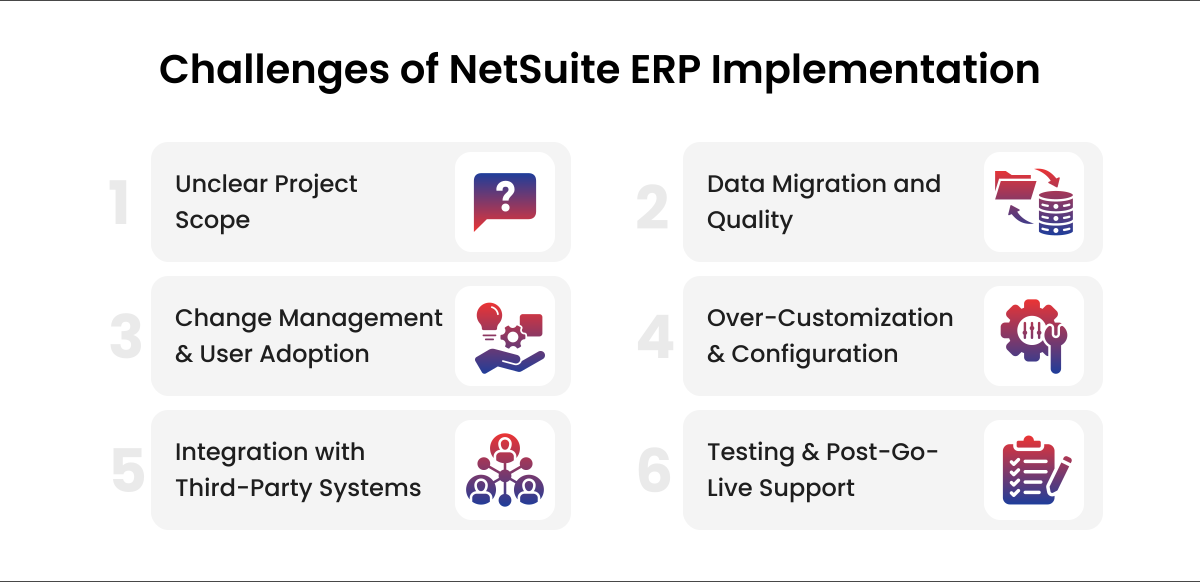
- Unclear Project Scope – Starting without a clearly defined scope, timeline, and alignment can lead to missed deadlines, increased costs, and impact the success of implementation.
- Data Migration and Quality – Data migration from legacy systems to NetSuite can be more complex than you expect. Legacy data is outdated, inconsistent, duplicated, and incomplete.
- Change Management & User Adoption – All ERP systems can fail when users don’t adopt them. Users may resist new workflows and feel overwhelmed by unfamiliar interfaces. Lack of training makes adoption difficult and slower.
- Over-Customization & Configuration – Another NetSuite implementation challenge is over-customization. Excessive scripts, custom fields, and increased workflow complexity make upgrades more difficult and maintenance more costly.
- Integration with Third-Party Systems – Most organizations rely on multiple systems, including CRM, e-commerce tools, logistics systems, and industry-specific solutions. NetSuite integration with such wide systems can be challenging when data structures don’t align or APIs lack standardization.
- Testing & Post-Go-Live Support – Skipping testing can lead to significant risk. Going live without validating workflows, integrations, permissions, and performance can disrupt operations. Delays in post-implementation support slow adoption and reduce the system’s long-term value.

Benefits of NetSuite ERP Implementation
NetSuite equips businesses with the tools they need to streamline operations, strengthen accuracy, and improve decision-making across every department.
1. Data Security & Compliance
NetSuite integration provides enterprise-grade security with role-based access controls, audit trails, and automated compliance controls. Its cloud infrastructure ensures data protection, regulatory alignment, and safe handling of sensitive financial and operational information.
2. Real-Time Reporting & Insights
The platform delivers dynamic dashboards, real-time KPIs, and customizable reports that enable leadership to monitor performance in real time. With up-to-the-minute visibility, businesses can make faster, smarter, and more accurate decisions.
3. Improved Collaboration Across Teams
By centralizing business data in a single cloud platform, NetSuite allows teams across finance, sales, operations, and supply chain to collaborate effortlessly. Everyone works from the same accurate information, reducing miscommunication and enhancing coordination.
4. Organized & Streamlined Workflows
By standardizing processes and automating repetitive tasks, NetSuite ensures that all departments have consistent and optimized workflows. It eliminates operational chaos and creates a more structured and efficient working environment.
5. Enhanced Operational Efficiency
With unified data, automated processes, and reduced manual errors, NetSuite significantly increases operational efficiency. Businesses can run leaner, minimize delays, and allocate resources more strategically for higher productivity.
| Recommended Read: NetSuite is Ending SOAP API: Time For NetSuite SOAP to REST Migration |
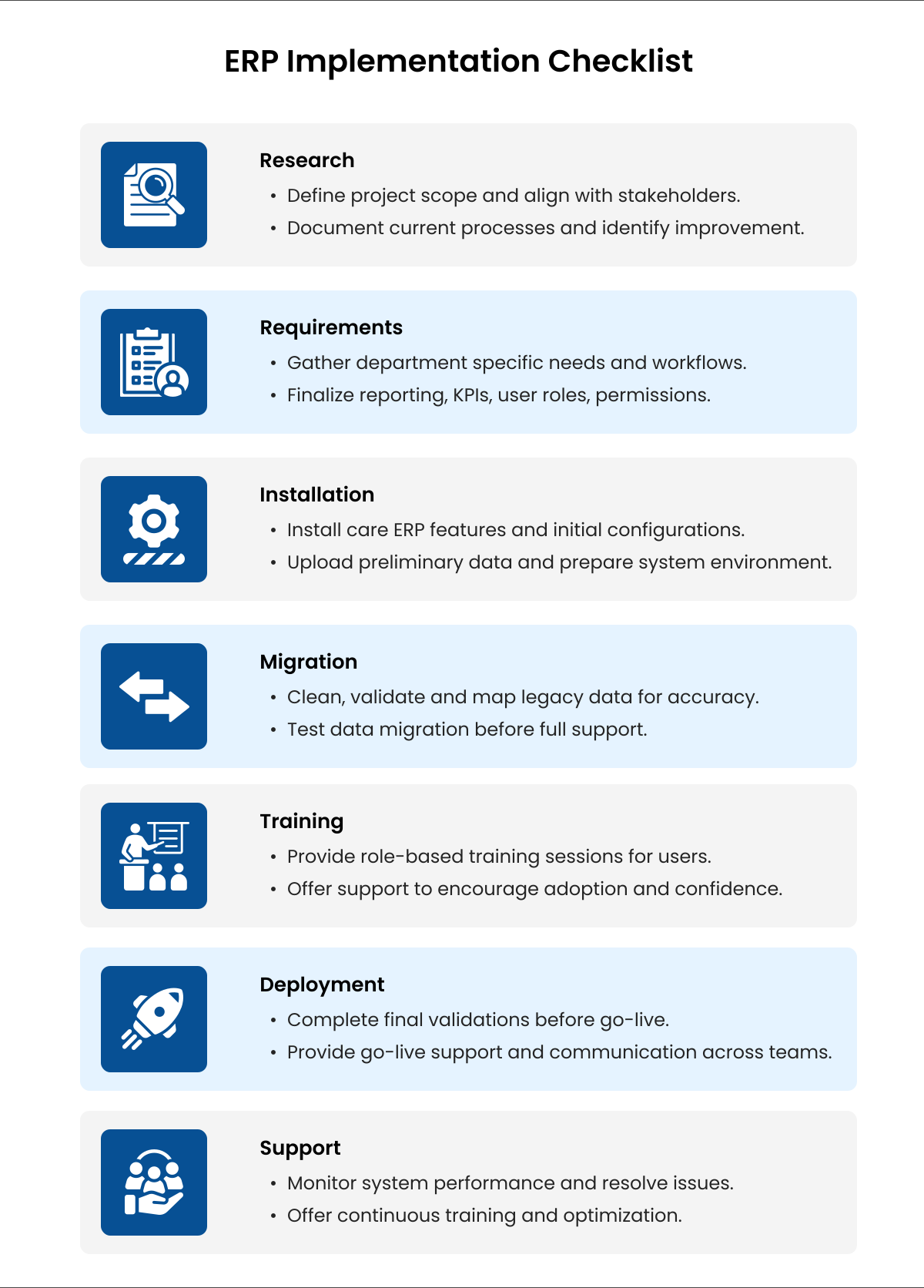
Checklist of Oracle NetSuite ERP Implementation
Pros and Cons of NetSuite Implementation
| Pros | Cons |
| Comprehensive Supply Chain & Operations Visibility | High Subscription & Ownership Cost |
| Unified dashboards and real-time reporting | Many advanced features require extra modules or add-ons |
| Delivers accurate budgeting, forecasting, multi-currency, and multi-subsidiary support. | Requires time, resources, and expert guidance to align NetSuite with business processes. |
| Easily supports business expansion, multi-channel operations, and growth | Data Migration Challenges, such as legacy data inconsistencies, duplicates, and outdated records |
| Integrates multiple departments and automates workflows | Users require proper training to leverage system capabilities and ensure full adoption |
Why Choose a Third-Party NetSuite Solutions Provider?
No matter how considerable your in-house NetSuite expertise is, it sometimes falls short of addressing challenges that can be quickly resolved with experience as a NetSuite solution provider. Third-party providers are technical experts, knowledgeable about proven methodologies, and well-versed in cross-industry challenges. They not only implement NetSuite but also help businesses to rethink processes, eliminate inefficiencies, and ensure NetSuite becomes a scalable engine for growth. Here are the key reasons to choose a third-party NetSuite provider:
1. Access to Specialized Expertise
Certified NetSuite consultants bring years of expertise and product knowledge, proven frameworks, and hands-on experience for successful implementation.
2. Successful Implementation
With structured methodologies, risk management, and best practices, partners ensure a faster, more accurate, and more cost-effective NetSuite implementation.
3. Advanced Customization & Integrations
Third-party providers can design custom workflows, advanced scripts, and integrations with external systems, capabilities often beyond standard implementations.
4. Cost-Effective, Scalable Support
Instead of hiring in-house specialists, businesses get ongoing support, optimization, and on-demand admin services, reducing long-term costs and dependencies.
5. Continuous Optimization After Go-Live
A reliable partner doesn’t disappear after deployment; they help fine-tune processes, train users, roll out enhancements, and ensure your NetSuite evolves with your business.
How NeosAlpha helps you with successful NetSuite ERP Implementation?
With 8+ years of partnership with NetSuite, we ensure successful ERP implementation that aligns with your business goals. Having implemented NetSuite across diverse industries and domains, we understand unique operational needs and tailor the solution for maximum impact. Here is how our experience and expertise lead to NetSuite implementation in your organization:
- Strategic Planning & Discovery: Clear roadmap, stakeholder alignment, and detailed requirement analysis.
- Industry-Specific Expertise: Experience delivering NetSuite for e-commerce, wholesale distribution, manufacturing, services, technology, and more.
- Clean & Accurate Data Migration: Structured approach that removes obsolete or incorrect legacy data.
- End-to-End Support & Training: Comprehensive user training, hypercare, managed services, and continuous optimization.
- Seamless Integrations: Connect NetSuite with Salesforce, SAP, or any other application; Boomi-powered integrations available.
- Best-Practice Delivery Approach: Phased execution, transparent communication, and risk-aware project governance.
Use Cases of NetSuite ERP Implementation
Oracle NetSuite ERP platform supports a wide range of business models, industries, and operational complexities. Its flexibility, automation capabilities, and scalability make it an ideal choice for organizations seeking to optimize their inventory, finance, e-commerce, and supply chain.
1. Financial Management & Real-Time Reporting
Automates core accounting tasks and delivers real-time financial insights to ensure businesses close books faster and with data-driven decisions.
2. Inventory & Supply Chain Optimization
NetSuite helped OKA transform its inventory management by eliminating stock inaccuracies, streamlining replenishment cycles, and enabling real-time visibility across locations.
3. Multi-Subsidiary Management
With centralized control across multiple locations and built-in support for multi-currency, multi-tax, and global compliance, the NetSuite ERP system is ideal for growing or multinational companies.
4. E-Commerce & Omnichannel Integration
NetSuite unifies online, in-store, and backend operations. We integrated NetSuite to ensure accurate inventory visibility, automated order processing, and centralized data. The retailer achieved faster fulfillment, improved customer experience, and scalable operational growth.
5. Professional Services Automation (PSA)
Leveraged NetSuite integration with PLC’s external systems to ensure connectivity and manage projects, processes, and operational workflows with higher accuracy and speed.
6. Manufacturing & Production Planning
Manufacturers can manage production schedules, work orders, BOMs, and quality control, improving efficiency and reducing production delays.
7. Subscription Billing & Revenue Management
NetSuite automates recurring billing, manages subscription lifecycles, and ensures compliance with ASC 606, making it ideal for SaaS and recurring revenue models.
8. Customer Relationship Management
With a unified customer view across sales, service, and marketing, NetSuite enhances customer engagement and improves the entire lifecycle, from lead to renewal.
Conclusion
The NetSuite ERP platform is designed to empower organizations to operate more efficiently and stay competitive in a fast-changing marketplace. Its flexibility and cloud-native architecture are suitable for businesses of all sizes, from startups to global enterprises.
However, unlocking the full value of the ERP platform requires careful planning and the right NetSuite implementation partner. Such partners ensure that your ERP journey is smooth, cost-effective, and tailored to your specific industry needs by following a strategic approach to configuration, integration, and ongoing optimization.
Frequently Asked Questions
1. How to implement NetSuite ERP?
NetSuite ERP implementation is a well-planned process that requires structured planning, requirement gathering, system configuration, data migration, testing, training, and support. NetSuite Consultants ensures a successful implementation that aligns with your business goals.
2. Which is the most challenging phase in an ERP implementation?
Data migration and user adoption are often challenging phases. It requires significant effort to migrate clean, accurate data, while ensuring that users embrace new workflows is critical.
3. What is the cost of implementing NetSuite ERP?
The cost of Oracle NetSuite ERP Implementation varies widely, depending on factors such as company size, modules, customization needs, and integration requirements. Contact our NetSuite experts to know the exact cost for your business.
4. Is Oracle NetSuite ERP suitable for small businesses?
Yes, NetSuite is well-suited for all types of businesses. It is especially well-suited for small businesses that are expecting rapid growth or need unified inventory, operations, and finance management.
5. Are ERP implementation phases different for cloud ERP vs. on-premises ERP?
The core phases of ERP implementation are the same for both on-premises and cloud systems. However, the activities may differ, as on-premises ERP requires hardware delivery, setup, and greater technical involvement in configuration and updates.

