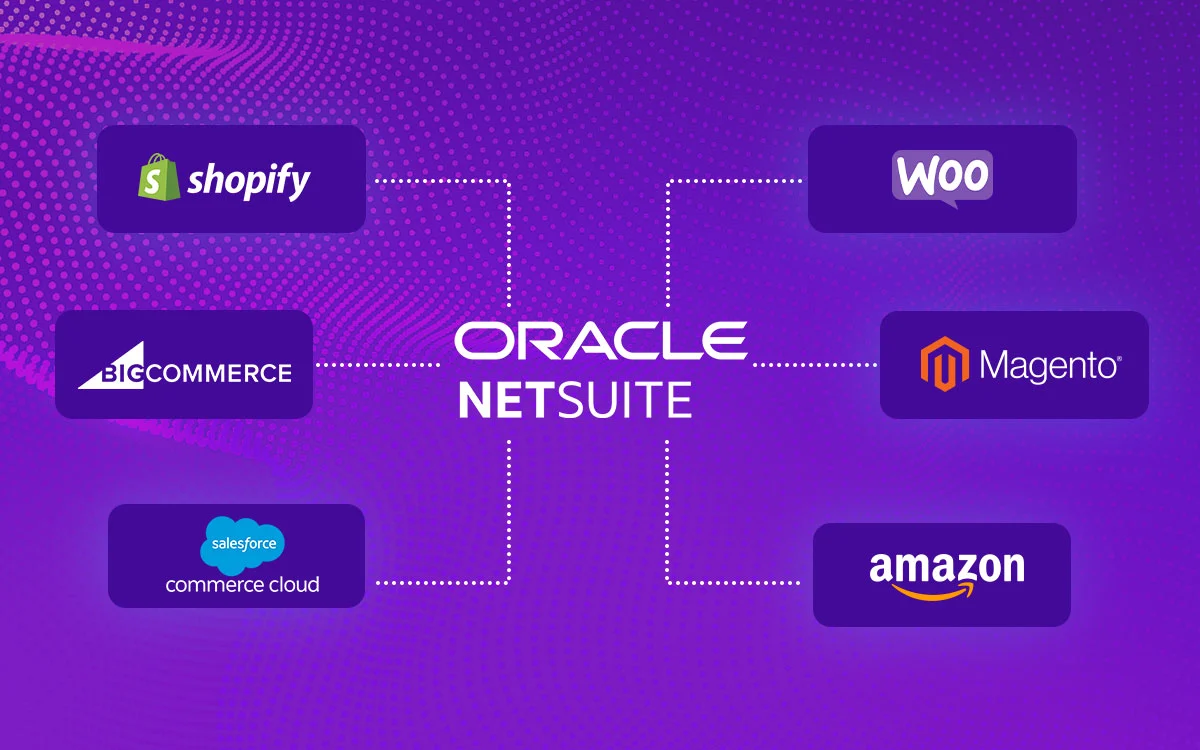
Have you ever wondered why e-commerce customers experience poor service, even when the business seems to be doing everything right? In many cases, it is not about the product or the support team, but a massive technology gap. When your e-commerce platform, inventory systems, fulfilment tools, and CRM are not connected, it creates a blind spot that affects the entire customer experience. Oracle NetSuite for e-commerce becomes indispensable. It offers unified e-commerce storefronts, payment systems, warehouses, CRM, and financials on a single central platform.
When it comes to online shopping, customer expectations are higher than ever. Same-day delivery, personalized experiences, competitive pricing, and real-time communication have become the new standard. To meet these demands, e-commerce companies must integrate NetSuite e-commerce solutions.
Why do eCommerce Businesses Need NetSuite?
E-commerce is continuously growing, with about 85.6% of people making an online purchase in the last month. Customers expect lightning-fast shipping, personalized services, and competitive pricing for a seamless experience. These growing expectations put immense pressure on e-commerce businesses to continually optimize their operations and remain industry leaders.
Key e-commerce trends:
- Over a third of customers spent less than $200 on online purchases
- 49% of customers start and end their shopping journeys on retailer websites or apps
- Smartphones are the top choice for online shopping among 70% of shoppers.
- High prices are the leading cause of cart abandonment across all age groups.
- 24% of online shopping happens during the holiday season
Common Challenges Faced by E-Commerce Businesses
These trends showcase the need for agile, efficient, and integrated e-commerce systems to deliver a rich customer experience by improving operational efficiency. However, many e-commerce businesses are struggling with challenges like:
- Fragmented System – Management of inventory, orders, accounting, and customer service results in disparate systems that create data silos, inefficiencies, and errors.
- Manual Efforts – Some e-commerce businesses still rely on manual data entry and reconciliation, which is time-consuming and error-prone.
- No Real-Time Visibility – It is challenging to make informed decisions without a unified view of all core system operations.
- Scalability Challenges – As the business grows, order volume, data load, and demand for quick operations increase, making the existing challenges more complex.
- Customer Experience – Disconnected systems lead to delayed shipment and inaccurate order fulfilment, damaging a brand’s reputation and creating a poor customer experience.
Value of an integrated ERP platform for eCommerce
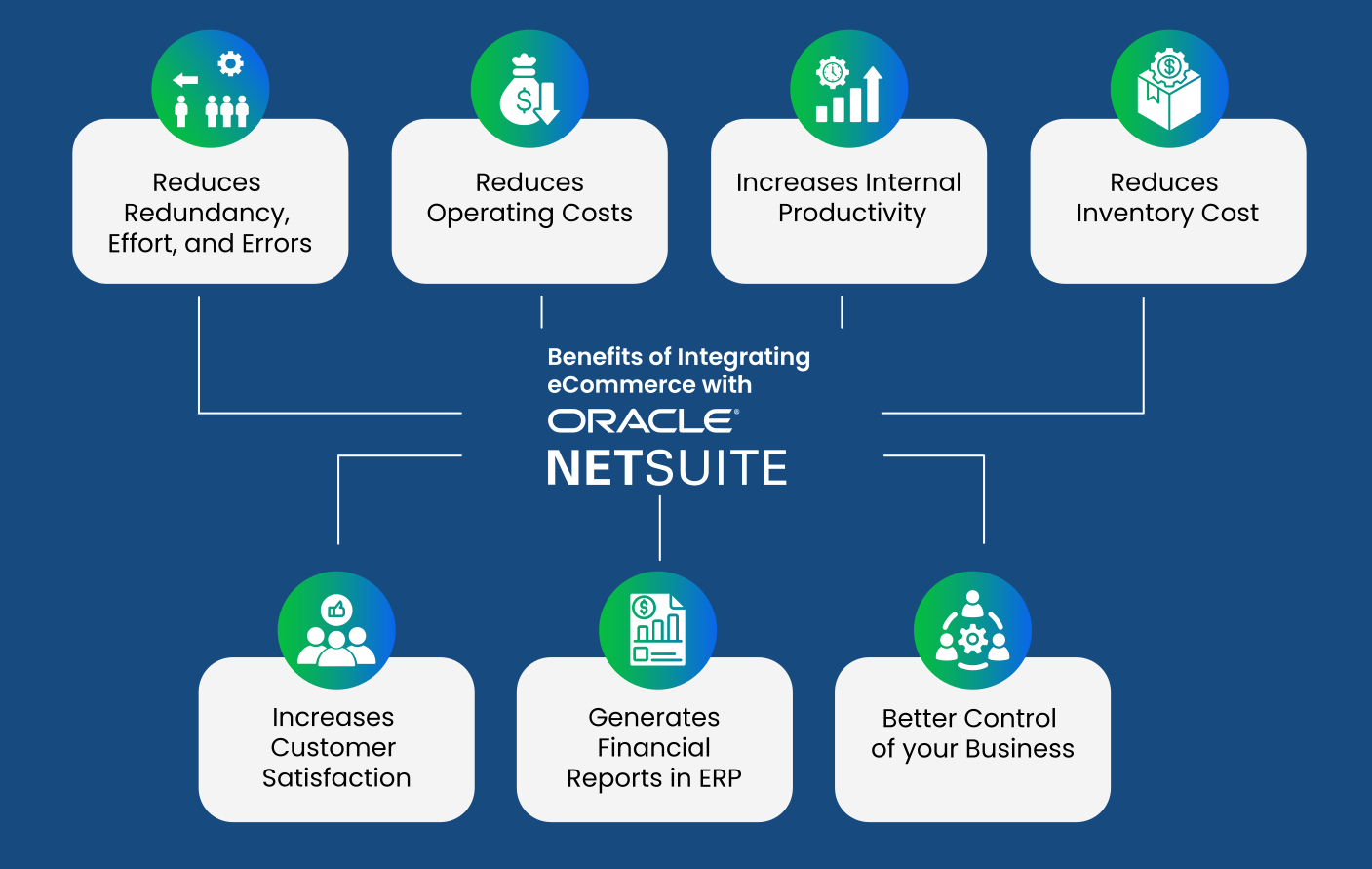
The E-commerce ERP solution addresses the challenges faced by all e-commerce businesses and streamlines their operations. It acts like the central nervous system, eliminating the data silos and connecting disparate systems. E-commerce ERP solutions like NetSuite offer a consolidated view of all core systems, including sales, marketing, inventory, finance, and customer service.
ERP provides real-time visibility into all business aspects and a 360-degree dashboard view.
It empowers e-commerce by integrating inventory management into the ERP to reflect stock levels across online stores. A well-integrated ERP ensures your business is always ready to scale and meet sustainable growth demands.
| Recommended Read: Why NetSuite ERP for Digital Transformation in 2025? |
Common e-Commerce Challenges
Common e-commerce challenges, such as disconnected systems, can result in poor order fulfilment, inaccurate inventory levels, and limited opportunities to scale.
- Managing High Order Volumes
Peak-season spikes or promotional surges can overwhelm systems that aren’t built to handle heavy traffic or large transaction loads, resulting in slow processing and order backlogs. - Cart Abandonment
Lengthy checkout steps, slow fulfilment processes, and limited or inconvenient payment options often cause customers to drop off before completing their purchase. - Customer Retention Challenges
Without a proper understanding of customer behaviour and preferences, businesses struggle to create personalized experiences, which in turn reduces loyalty and repeat purchases. - Shipping and Logistics Inefficiencies
Manual processes and a lack of real-time visibility in stock or delivery status can cause delays, errors, and poor customer satisfaction. - Handling Returns and Refunds
Complex or poorly managed return workflows create operational strain and negatively impact customer trust, especially when refunds or restocking aren’t handled efficiently. - International Sales & Multi-Currency Complexities
Expanding globally introduces challenges like managing multiple currencies, varying tax rules, and cross-border logistics, which complicate operations and compliance.
How NetSuite for E-Commerce optimises Operations?
For e-commerce businesses, customer satisfaction is essential; operational efficiency can help achieve this. However, as e-commerce grows, managing data volume and demand becomes increasingly challenging, affecting operations and the user experience.
NetSuite is the most reliable platform for optimising e-commerce operations. It offers centralised data, real-time insights, updated inventory levels, and quick order fulfilment to enhance customer experience. NetSuite’s B2B integration, advanced analytics, and capabilities can also improve operational efficiency.
1. NetSuite SuiteCommerce
SuiteCommerce is a powerful website builder designed to empower online businesses to create and manage seamless online and in-store shopping experiences.
SuiteCommerce connects your online store directly with all the core business functions. Within NetSuite, it centralizes the management of your e-commerce website, inventory, orders, customer data, and marketing within a single system.
Benefits
- Create a responsive design and automate screen size changes for 70%+ of shoppers who browse on mobile.
- Customize the pre-built templates and accelerate the marketing and promotions process.
- Optimize your e-commerce website with built-in SuiteCommerce SEO tools, including customizable URLs, meta tags, and XML sitemaps.
2. Unified Platform for Seamless Integration
NetSuite for E-commerce is known for its unified architecture, which enables all core systems and teams to work in sync through a single database.
When you integrate NetSuite with your ecommerce store, it records all transactions, customer interactions, and inventory movements in a central database. This centralized data is accessible to all required departments, such as sales, marketing, inventory, and finance.
Benefits
- Automation of all processes, eliminating the need for manual data entry and reducing inconsistencies.
- Automate workflows with NetSuite B2B integration and trigger actions based on specific events, such as new orders.
- Enhance operational efficiency by reducing errors, automating routine tasks, and freeing up resources to focus on strategic planning.
3. Robust Inventory Management
NetSuite e-commerce enables real-time inventory management based on stock-level data across multiple channels and locations. Historical data helps forecast demand, calculate reorder points, and automate purchase orders to minimize holding costs while showing product availability.
Benefits
- Forecast demand using statistical algorithms and historical data to adjust inventory proactively.
- NetSuite calculates your business’s inventory cost by tracking land costs and analyzing accurate profitability.
- Integrating demand forecasting and automated replenishment will help maintain optimal stock levels by minimizing lost sales and tied-up capital.
4. Order Management and Fulfillment
NetSuite B2B ecommerce automates the order lifecycle. All the orders placed on the NetSuite SuiteCommerce website are automatically routed to the appropriate warehouse in real time. The system then creates shipping labels with address information, generates tracking numbers, and notifies the customer about the order status.
Benefits
- Provide a rich customer experience with real-time order tracking via a self-service portal.
- NetSuite integration with shipping management allows automatic label generation, tracking, and delivery updates.
- Real-time monitoring and updates give customers a quicker and more accurate order fulfilment experience.
5. Enhanced Customer Relationship Management (CRM)
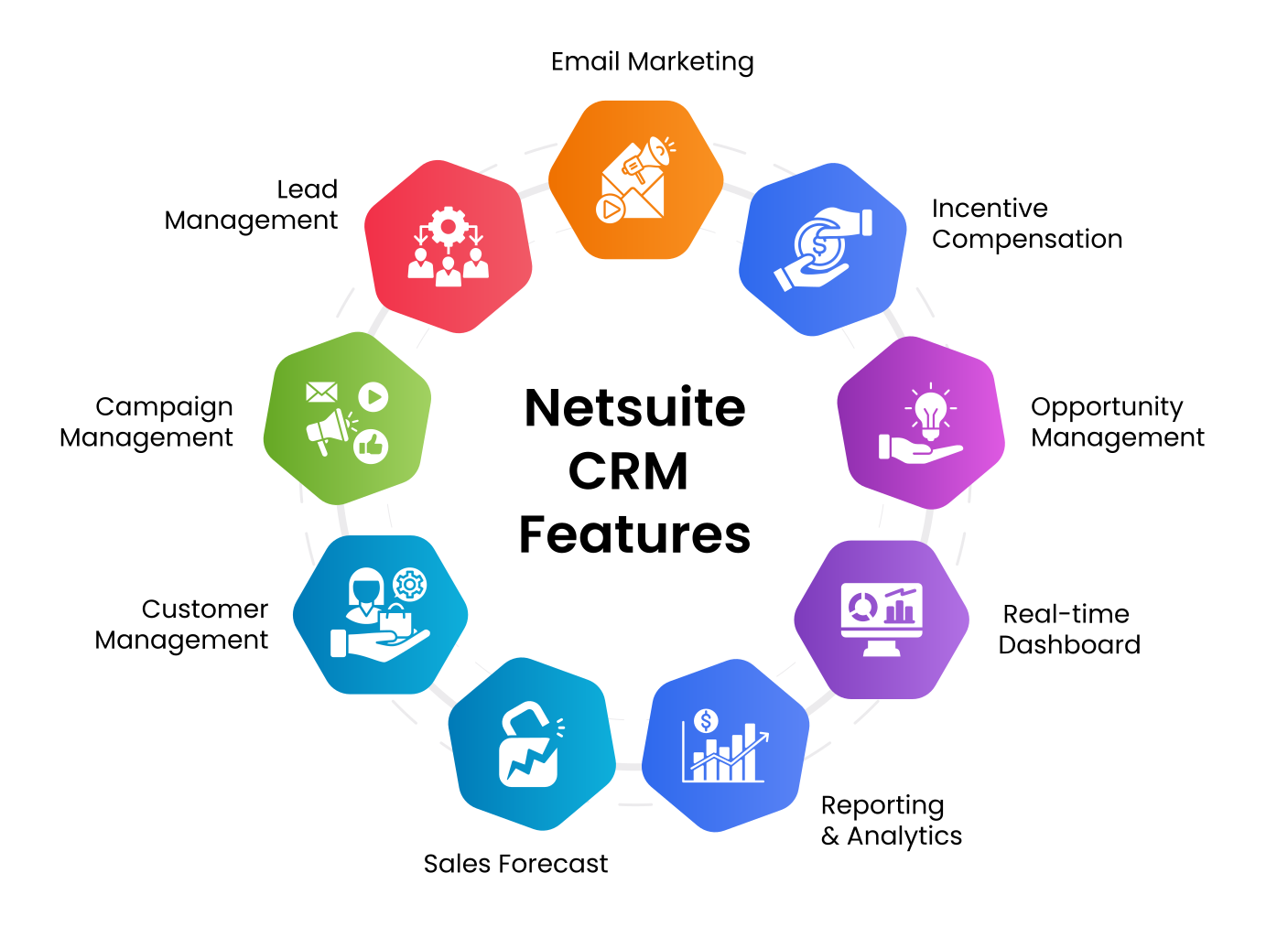
NetSuite CRM for e-commerce provides a unified view of customer data – history, interactions, and interests to enable personalized marketing campaigns. This data provides an in-depth analysis of customer interest and helps to understand the whole customer segment, create personalised messages, and enhance customer interactions.
Benefits
- Create personalized campaigns and automate them to target specific segments.
- Provide a quick response to customer queries with automated responses.
- Enhance customer retention with more targeted campaigns and personalised marketing.
6. Financial Management and Reporting
NetSuite E-commerce ERP solution ensures financial management system by connecting all the core finance systems – accounting, billing, revenue recognition, etc., to provide comprehensive reporting.
NetSuite ERP automates all processes, including general ledger entries and accounts payable.
Benefits
- All transactions are automatically recorded, eliminating the need for manual data entry.
- Get insights into key metrics like revenue, expenses, and profitability for better finance management.
- NetSuite automates revenue recognition in accordance with accounting standards.
7. Multi-Channel e-Commerce Management
Scale your business by managing multiple online storefronts, marketplaces like Amazon and eBay, and sales channels with NetSuite B2B integration.
NetSuite creates a centralized view of product catalogues, inventory orders, and customer data and synchronizes it with all other channels.
Benefits
- Simplify the management of multiple online channels within a single system and reduce administrative overhead.
- Reduce complexity by streamlining the core operations across all channels.
- Provide a unified customer experience by ensuring consistent product information and branding across channels.

How to get started with NetSuite for E-commerce?
NetSuite is a powerful and advanced tool for optimising e-commerce operations. However, to address all your business needs and challenges, you must have a strategy for implementing it in your e-commerce platform.
Here is the step-by-step guide to begin the planning of NetSuite integration:
1. Assess Your Business Needs
Before starting the implementation, create a list of business needs and define operational goals. Ask yourself:
- What are your pain points? (inaccurate inventory, slow order processing, or poor customer engagement)
- What are your KPIs? (order fulfilment on time, customer satisfaction, increase in sales, and ROI)
- What are your long-term growth objectives for your business?
- Why do you need NetSuite for your e-commerce business?
2. Right NetSuite Implementation Partner
Finding an experienced implementation partner is the most critical decision you will make. Find a NetSuite for an ecommerce consultant who has experience working across different domains, can address all the challenges of your retail store, and leverage the full potential of NetSuite for your business.
3. Plan for Implementation
Create your integration strategy with NeosAlpha to get started. Explain your needs and goals for smooth integration between your e-commerce platform and NetSuite. Get a unified, real-time data flow to prevent data silos and scale your e-commerce operations.
4. Training and Support
NetSuite is easy to use, but to leverage its advanced functionality, you need to provide your team with training. Your team must be equipped and educated on the NetSuite platform so they can proactively identify integration errors.
To scale your e-commerce platform, you can get your team trained by the NetSuite implementation partner and unleash the platform’s benefits.
Conclusion
NetSuite for e-commerce empowers business operations by streamlining core systems, enhancing the customer experience, and providing a scalable foundation for growth. From real-time inventory updates to customer notification for purchase orders, NetSuite accelerates and redefines e-commerce business operations.
Not only do you get a unified view of your data, but as an online business owner, you can easily manage product availability across different channels. Whether starting from one online store or scaling to a large enterprise, NetSuite for e-commerce can adapt to all your business needs and demands.
Frequently Asked Questions
1. How do cloud-based solutions enhance ecommerce operations for NetSuite clients?
Cloud-based solutions give NetSuite clients real-time visibility, scalability, and seamless data flow across e-commerce operations. They reduce manual processes, improve performance during peak demand, and ensure consistent, accurate business insights.
2. How can businesses streamline returns and refunds with NetSuite ecommerce services?
NetSuite solutions for ecommerce centralize return requests, automate refund processing, and update inventory in real time. This reduces manual workload and creates a smoother, more transparent experience for both customers and support teams. To streamline your returns and refunds, contact us.
3. How can ecommerce businesses automate order management with NetSuite integrations?
NetSuite for e-commerce growth automates order capture, routing, fulfilment, and status updates across channels. This integration minimizes errors, improves processing speed, and ensures consistent order handling.
4. Are there scalable tools to connect NetSuite with multiple online storefronts?
Yes, Boomi is a widely used, scalable integration platform that connects NetSuite with multiple online storefronts. Boomi NetSuite Integration supports high-volume, multi-channel data flow and automated synchronization.
5. What strategies drive ecommerce growth for companies using NetSuite platforms?
Companies can ensure NetSuite ecommerce growth by leveraging unified data, automated workflows, and real-time insights to optimize operations. They can even expand sales channels, personalize marketing, and streamline fulfillment.

