Fragmented API Landscape
The university’s applications interacted with backend systems independently, leading to siloed services and limited visibility into available APIs.
Our client is a prestigious UK research institution and a member of the Russell Group, known for its global reputation in education and research excellence. The university serves more than 30,000 students from over 150 countries and operates a complex digital ecosystem supporting academic, administrative, and student services.
Over time, the university’s digital infrastructure evolved with multiple independent systems interacting with backend applications. While these systems enabled various services, they operated in silos, creating fragmentation and limiting visibility into available APIs and services. To improve operational efficiency and modernize its digital infrastructure, the university sought to implement a centralized API management framework that would enable better governance, security, and discoverability across its technology landscape.
The university aimed to establish a centralized API governance framework to streamline API development, deployment, and consumption across departments. A key objective was to maximize reuse of existing digital capabilities by making APIs easily discoverable to developers and internal teams, thereby reducing redundant development. The institution also wanted to enable faster access to student and operational data for administrative services while adopting an API-first architecture that treats APIs as reusable products rather than isolated integrations. Additionally, the university sought to create a developer-friendly ecosystem with standardized API specifications, consistent governance practices, and a secure environment for managing and deploying APIs across its growing digital infrastructure.
Education
Kong
API Management Implementation

The university’s applications interacted with backend systems independently, leading to siloed services and limited visibility into available APIs.
API onboarding and deployment involved multiple manual steps, slowing down development cycles and introducing inconsistencies.
Developers struggled to locate and reuse existing APIs because there was no centralized developer portal.
The university required stronger API security controls aligned with internal governance policies and OWASP standards.
Without defined specifications and design standards, APIs were developed inconsistently across teams.
Looking to centralize API governance and accelerate API delivery across your organization? NeosAlpha helps enterprises implement secure and scalable API management platforms using Kong and API Ops best practices.
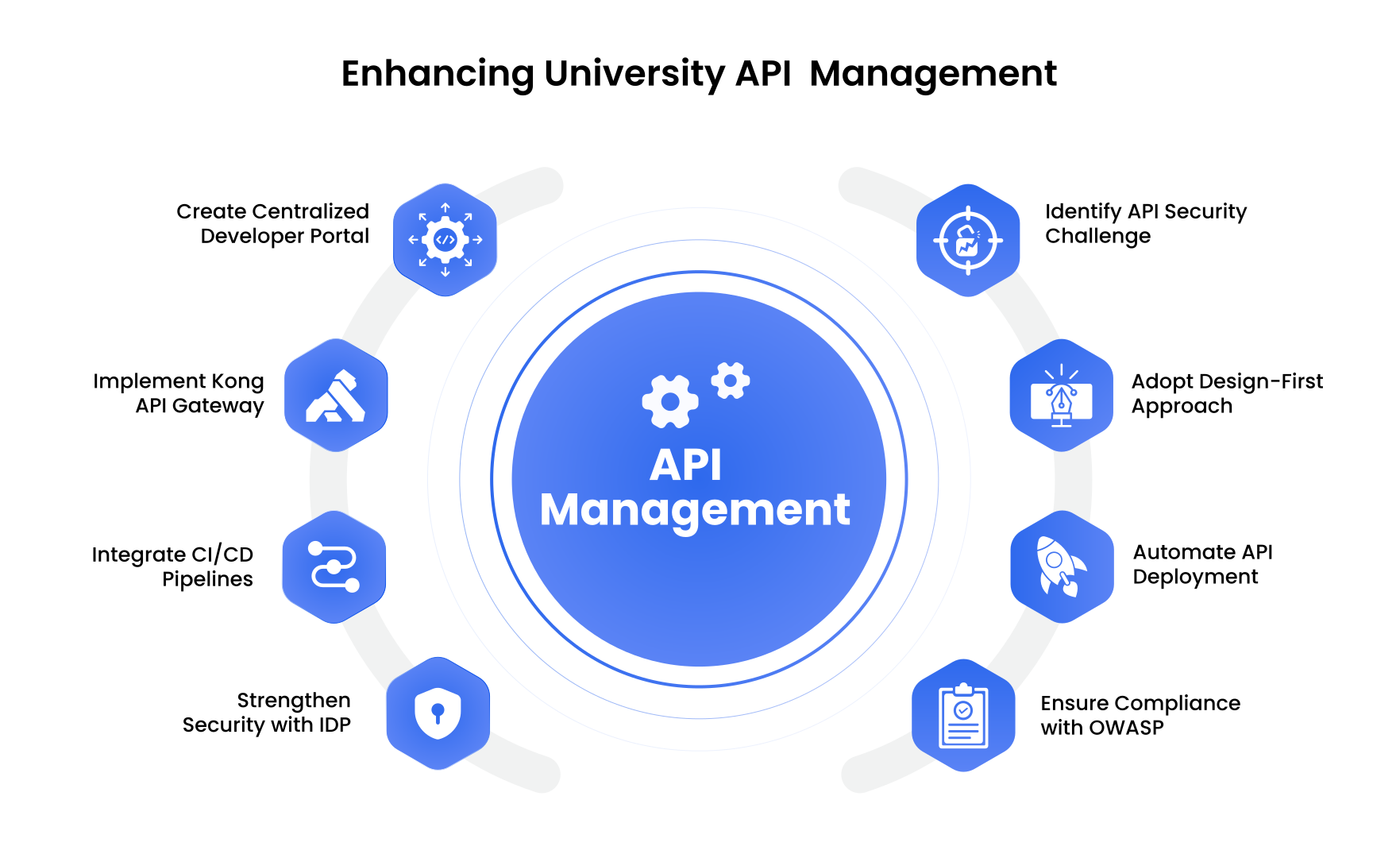
Learn More About Kong API GatewayNeosAlpha implemented Kong API Gateway as the centralized API management platform, providing a single control point for all APIs. This enabled consistent traffic management, security enforcement, and monitoring across the university’s digital ecosystem.
The team adopted a design-first approach, defining APIs using standardized specifications before development. This ensured consistency, improved governance, and reduced security risks.
A unified Kong Developer Portal was deployed to provide developers with a single interface for discovering APIs, accessing documentation, and integrating services efficiently.
To streamline API lifecycle management, NeosAlpha implemented CI/CD pipelines integrated with API Ops practices. Using declarative configurations and governance tools such as Spectral YAML, Insomnia, and Inso CLI, APIs could be automatically validated, deployed, and version-controlled.
Security was strengthened through the implementation of Kong plugins, including rate limiting, authentication using OpenID Connect (OIDC), and centralized logging. Integration with the university’s identity provider enabled secure access through existing single sign-on systems.
Kong was integrated with monitoring tools such as Splunk, providing real-time analytics, logging, and insights into API performance and usage.
The university established a fully governed API ecosystem with standardized processes and best practices for API lifecycle management.
Internal teams gained the ability to onboard and manage APIs independently through automated pipelines and governance frameworks.
The centralized developer portal simplified API discovery, access to documentation, and integration for internal development teams.
Automated CI/CD pipelines significantly reduced API deployment time and minimized manual errors.
The implementation of Kong’s security plugins and identity integration improved API protection and ensured compliance with institutional security standards.

Tell us what you're looking for and we'll get you connected to the right people.